

Border Green: Cannabis Smuggling Routes Then and Now

By John Swanepoel
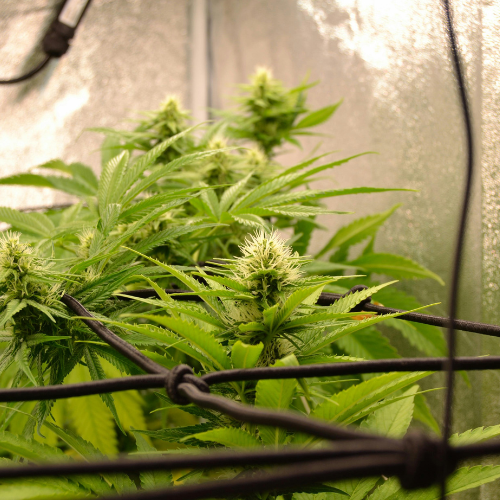
Cannabis cultivation in 2026 looks very different from the grow rooms of five years ago. From a small indoor setup in a spare room to a backyard greenhouse or a tightly controlled micro-facility, growers are becoming more precise, more informed, and more intentional about how they grow.
This isn’t just about bigger yields. It’s about efficiency, consistency, sustainability, and control. Advances in technology, better access to information, and shifting legal landscapes — including in South Africa — are shaping a new era of indoor and small-scale cultivation.
Here’s a look at the key trends defining next-level growing in 2026, both locally and globally.
Smaller grows, smarter systems
One of the biggest shifts in recent years is the move away from large, inefficient grows toward smaller, highly controlled environments. Instead of scaling up, many growers are scaling smarter.
Small-scale and indoor growers are focusing on:
- Precision rather than volume
- Quality over quantity
- Repeatable results
- Lower energy and water use
This approach suits both personal growers and boutique producers, especially in regions where large commercial operations are still restricted or tightly regulated.
LED lighting has fully taken over
LED lighting is no longer “new tech” — it’s the standard. Modern grow LEDs are far more efficient, customisable, and plant-specific than older lighting systems.
Growers now routinely adjust:
- Light intensity at different growth stages
- Colour spectrums for veg vs flowering
- Daily light cycles based on plant response
The benefits are clear. LEDs use less electricity, produce less heat, and allow tighter environmental control. For South African growers dealing with rising energy costs and load shedding, this shift is significant.
Some setups now integrate lighting schedules with backup power or solar systems, reducing reliance on the grid.
Automation comes to small grows
Automation used to be reserved for large commercial facilities. In 2026, it will be accessible to home and small-scale growers.
Affordable controllers now manage:
- Lighting
- Temperature and humidity
- Fans and airflow
- Irrigation schedules
These systems don’t remove the grower from the process. Instead, they reduce guesswork and human error. Growers can monitor conditions via apps, receive alerts, and make adjustments remotely.
For people juggling work, family, and cultivation, automation makes consistency possible without constant hands-on management.
Data-driven growing replaces intuition alone
Experience still matters, but in 2026, it’s backed up by data.
Growers are increasingly tracking:
- Temperature and humidity trends
- Water and nutrient usage
- Growth rates
- Harvest outcomes
This information helps growers fine-tune their setups over time. Instead of relying only on feel or tradition, they can see what actually works in their specific environment.
Even small home grows benefit from this approach. A few sensors and a simple log can dramatically improve results across cycles.
Living soil and regenerative practices gain ground
While technology is advancing, there’s also a strong movement back toward natural growing methods, especially among small-scale cultivators.
Living soil systems — where soil is treated as a living ecosystem rather than an inert medium — are becoming more popular. These systems rely on microbes, organic matter, and natural nutrient cycling rather than constant bottled inputs.
Benefits include:
- Improved plant resilience
- Better flavour and aroma
- Reduced nutrient runoff
- Less dependence on synthetic fertilisers
In South Africa, where water conservation is critical, these methods also support more sustainable use of resources.
Water efficiency becomes a priority
Water management is a major focus in 2026. Indoor and small-scale growers are paying closer attention to how much water plants actually need.
Drip irrigation, automated watering, and moisture sensors help prevent overwatering. Some growers are also capturing and reusing runoff in closed-loop systems.
This isn’t just about saving water. Overwatering is one of the most common mistakes new growers make, and better water control leads to healthier roots and more consistent growth.
Hydroponics and hybrid systems evolve
Hydroponic growing remains popular, especially where space is limited or precision is key. But the trend is moving away from rigid systems toward hybrid approaches.
Many growers now combine:
- Hydroponic feeding
- Organic additives
- Inert media with biological supplements
These hybrid systems aim to deliver the fast growth of hydroponics with some of the resilience and flavour benefits of soil-based growing.
For small-scale indoor growers, this flexibility allows experimentation without committing fully to one method.
Genetics and plant selection matter more than ever
In 2026, growers are more selective about genetics. Instead of chasing the latest hype strain, many are choosing plants based on:
- Growth characteristics
- Resistance to pests or mould
- Suitability for indoor spaces
- Consistency across cycles
For South African growers, genetics that handle heat, humidity shifts, or limited vertical space are especially valuable.
There’s also growing interest in preserving and working with local or heritage genetics, reflecting a broader appreciation for biodiversity and adaptation.
Pest and disease management goes low-impact
Chemical-heavy pest control is falling out of favour, particularly for small indoor grows. Instead, growers are using preventative and low-impact strategies.
These include:
- Clean grow environments
- Proper airflow and spacing
- Beneficial insects
- Natural sprays and biological controls
The focus is on prevention rather than reaction. Healthy plants in stable environments are less likely to develop serious pest or disease issues in the first place.
Energy awareness shapes grow design
Energy efficiency isn’t just an environmental concern — it’s a practical one. Electricity costs and reliability influence how growers design their spaces.
In South Africa, many indoor growers are:
- Downsizing grow rooms
- Improving insulation
- Using energy-efficient equipment
- Scheduling lighting around power availability
Some are integrating solar solutions or battery backups, especially for lighting and environmental controls.
Education is more accessible than ever
One of the most critical changes in 2026 isn’t hardware — it’s knowledge.
Growers have access to:
- Online courses
- Community forums
- Local workshops
- Shared grow data and case studies
This makes it easier for beginners to avoid common mistakes and for experienced growers to keep improving. The gap between novice and expert is shrinking faster than ever.
Local context still matters
While global trends influence cultivation, local conditions always shape outcomes. Climate, power stability, water access, and legal frameworks all play a role.
In South Africa, private cultivation exists within specific legal boundaries, and small-scale growers often prioritise discretion, efficiency, and sustainability. These realities push innovation in practical directions rather than flashy ones.
Finally
Next-level cultivation in 2026 is about control, efficiency, and understanding how plants respond to their environment.
Indoor and small-scale growers are combining smart technology with natural practices, data with intuition, and innovation with sustainability. The result is better quality, lower impact, and more consistent results — even in challenging conditions.
A simple next step for growers is to focus on one upgrade at a time. Better lighting, improved airflow, or more accurate watering can transform a grow without overwhelming the process. In 2026, growing smarter matters more than growing bigger.