

Rolling Stoner Sessions with the Jazzfarm
Myrtle Clarke’s Lanseria Smallholding, Where Dagga, Permaculture and Activism Grow Side by Side
Interviewer: Andrew Macfarlane
Transcriber and writer: Marli Wentzel
Just past the edge of Johannesburg, where the suburbs thin out and Lanseria begins, there is a 2.4-hectare smallholding most people would drive straight past. That is rather the point. The Jazzfarm does not advertise. It is a home before it is anything else, and only after that a garden, a cannabis nursery, an activism hub and one of the more authentic stops on Route 420.
Rolling Stoner sat down with Myrtle, one half of the couple behind Fields of Green for ALL and a fixture in South African cannabis activism, to talk about the place she calls home.
The farm has been in the family since Jules (late husband) bought it in 1992. He had come to South Africa to buy a Land Rover and drive it back to England, and simply never left. Back then Lanseria was still an aerodrome where you opened and closed the gate yourself, and the land held roughly seven trees. Everything green there now was planted, coaxed and waited on.
“That’s how long it’s taken for it to look like it does,” Myrtle says.
A Home, Not an Airbnb
The Jazzfarm is where Myrtle, Seth and Ami live, alongside Jo and Charl and whoever happens to be passing through. That domestic core shapes everything on the property. There is accommodation, but it is kept for friends, overseas visitors and activists rather than listed online.
“Who wants strangers rocking up at your home?” Myrtle asks.
It sits, she says, on the outskirts of one of the great cities on earth. Johannesburg gets a rough write-up online, but she reckons there is an art to living there, and the Jazzfarm is one of its hidden gems. Not a venue that happens to be a home, but a home that occasionally opens its gates.
Learning from the Masters
Myrtle’s permaculture education began at Rustler’s Valley in the Free State, where she ran the restaurant and took over the nutrition side of the training courses. She learned from the founders of the movement itself. Bill Mollison, the Australian regarded as the father of permaculture, taught a design course there, and the people behind what became Food and Trees for Africa passed through too.
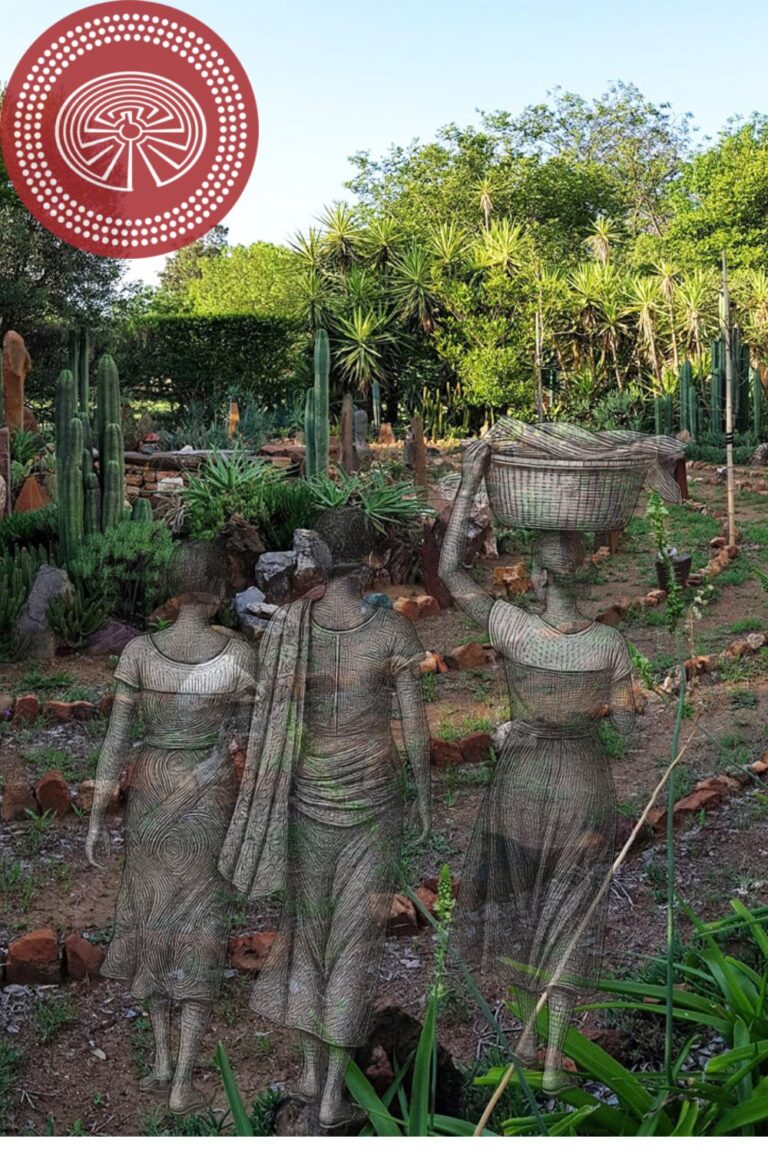
When she arrived at the Jazzfarm in 2005, the garden was in a state. She brought better seed, converted the greenhouses to permaculture and slowly rebuilt the soil. The sweat lodge came from Rustler’s as well. The labyrinth was Jules’s dream, mapped out before she arrived, now grown so thick it needs trimming back each year just so you can walk it.
Many Gardens in One
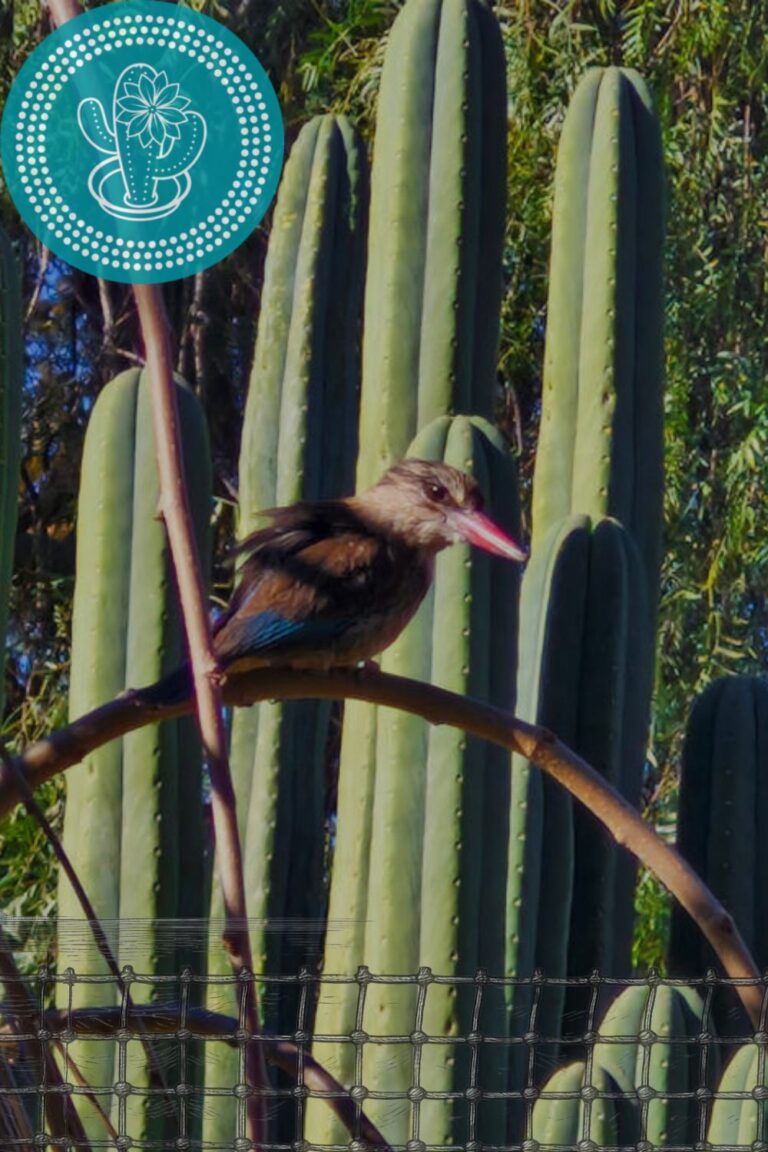
Walk the property and you move through a series of small worlds. Three greenhouses, one dedicated to three cannabis crops a year in raised companion beds that are twenty-five years old. A cactus garden holding a prized batch of San Pedro from northern Peru. A food garden, a nursery of dagga tunnels, chickens that are firmly Ami’s pets, and the labyrinth, built on an old tennis court.
Then there is the wild third of the farm that Myrtle has spent six years rewilding, pulling out invaders season after season so the indigenous plants can return. Wild dagga grows there, both the red Transvaal Leonotis and the orange Natal one, along with strange little lilies that appear on their own. Swales run down the slope to hold water and build soil, because the more beds you make, the less grass there is to cut and the more rain the land keeps.
The result is a genuine ecosystem. BirdLife South Africa drew up a bird list for the area, and Myrtle has now spotted about 99% of it. A kingfisher visits a few times a year. A leopard tortoise, thought to be around seventy years old, wanders the grounds.
The Oldest Members’ Club in the Country
The Jazzfarm Social Club has been running since 2006, making it the oldest cannabis members’ club in South Africa. Everything on its shelves is grown and produced on site, seed to sale, right down to oils, soaps and creams pressed from the farm’s own lab-tested crop.
That model is under pressure. With a members’ club now on seemingly every corner, it has become far easier for people to pop into the nearest shop than to seek out something grown with care. Myrtle is candid that selling weed used to keep the farm going and no longer does. Yet she believes a turn back toward organic, sun-kissed, craft cannabis is coming. It will just take a while.
She draws a parallel with the Swartland wine revolution, where growers took old, neglected vines and turned them into artisanal bottles prized for flavour. The same logic applies to dagga. Organically grown, cured on the branch, richer in terpenes, with a heritage you can actually visit.
A Stop Worth Making
For Route 420, that is exactly the appeal. This is not a party stop. It is a place to learn permaculture, watch birds, walk the labyrinth and leave the cares of the world behind for an hour. Over the years it has quietly become a museum of activism, hosting commercial permaculture courses and drawing curious growers from across Africa.
If you have any interest in plants, gardening or the roots of South African cannabis culture, the Jazzfarm is where a great deal of it began. Almost everyone in the industry, Myrtle notes with a smile, eventually comes through the gate.