


Needle Drops and Paper Cuts
Something is spinning.
By Pagan Pretorius
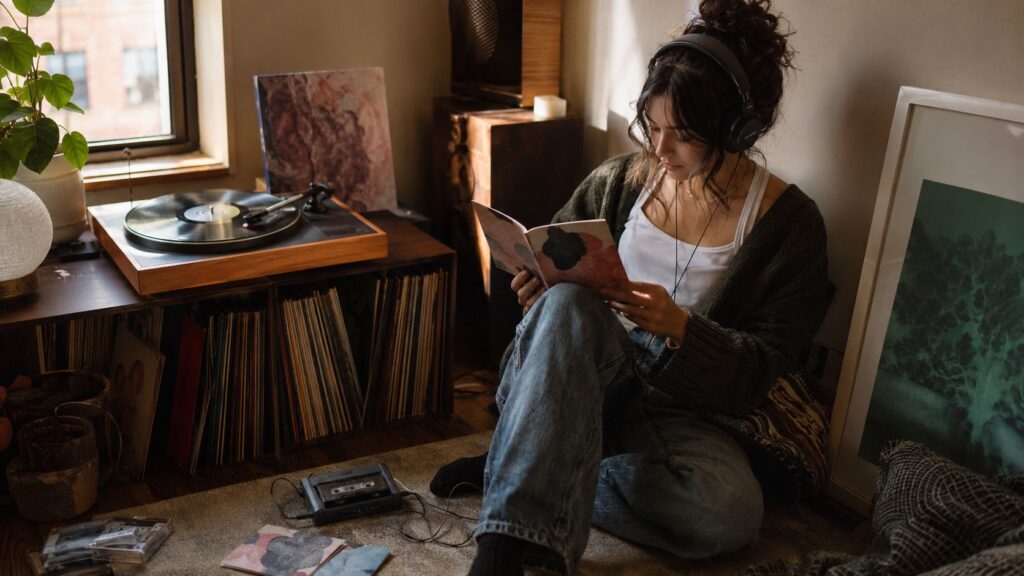
In bedrooms, small apartments, and record shops, younger listeners are dropping needles on vinyl, pressing big buttons on cassette players, and opening handmade zines that smell a bit like ink, paper, and a hint of rebellion. These things are physical, a little inconvenient, and not so easy to ignore.
The algorithm hasn’t been invited.
For people who grew up with instant access to nearly every song, image, and opinion imaginable, physical media gives something digital culture can’t quite match: a clear start, a finish, and an object that stays still. Unless you’re someone who can still lose a cassette tape in a small apartment.
Streaming Gave Us Everything
And therein lies the problem.
Streaming made music incredibly easy to access by removing the cost, waiting, and uncertainty that used to shape how people found albums. But it also turned listening into a constant flow of recommendations, autoplay queues, and oddly specific playlists like “romanticising your Tuesday commute.”
Convenient? Absolutely. Memorable? Not always.
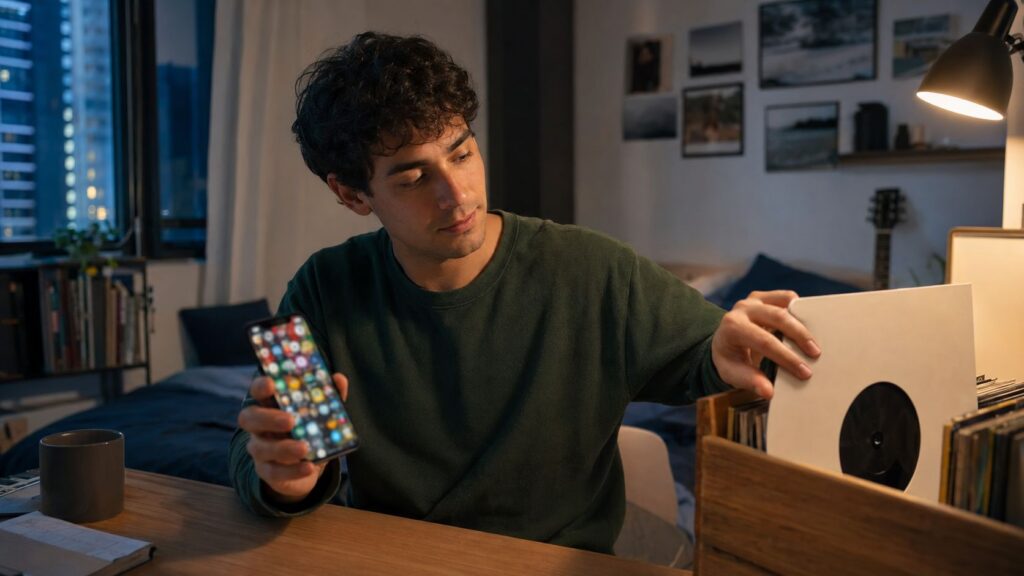
When every song is right there, picking one can start to feel oddly tiring. One album ends, another begins, and soon you’re listening to a singer you don’t know just because the platform thought the tempo matched your dishwashing.
Streaming isn’t going anywhere. In 2025, it made up 82% of US recorded-music revenue, so there’s no need to say goodbye to playlists. But physical music sales also grew, and US vinyl revenue passed $1 billion for the nineteenth year in a row. According to the RIAA, the analogue revival isn’t replacing digital listening, but it does balance it out.
People want both. They want the convenience of finding a song in seconds and the pleasure of owning the album that matters.

Vinyl Turns Listening Into an Occasion
Vinyl asks for attention. You pick a record, take it out of its sleeve, put it on the turntable, and lower the needle. The whole process feels much more intentional than tapping a thumbnail while answering messages and wondering why you opened the fridge. Then you listen.
A vinyl album has physical limits, and those limits shape how you listen. There’s a first side and a second side, liner notes, artwork, and credits. When the music stops, someone has to get up.
That small effort matters because it stops you from just letting music fade into the background. Vinyl makes listening feel like a real event.
The attraction isn’t confined to people reliving their youth, either. In the UK, vinyl album sales reached 7.6 million units in 2025, rising for an eighteenth consecutive year, according to the British Phonographic Industry.
Many of the people buying records weren’t alive when vinyl first ruled the living room, which makes the trend less about memory and more about discovering a form of attention that feels new precisely because it’s old.
Cassettes: Flawed, Fiddly and Somehow Charming
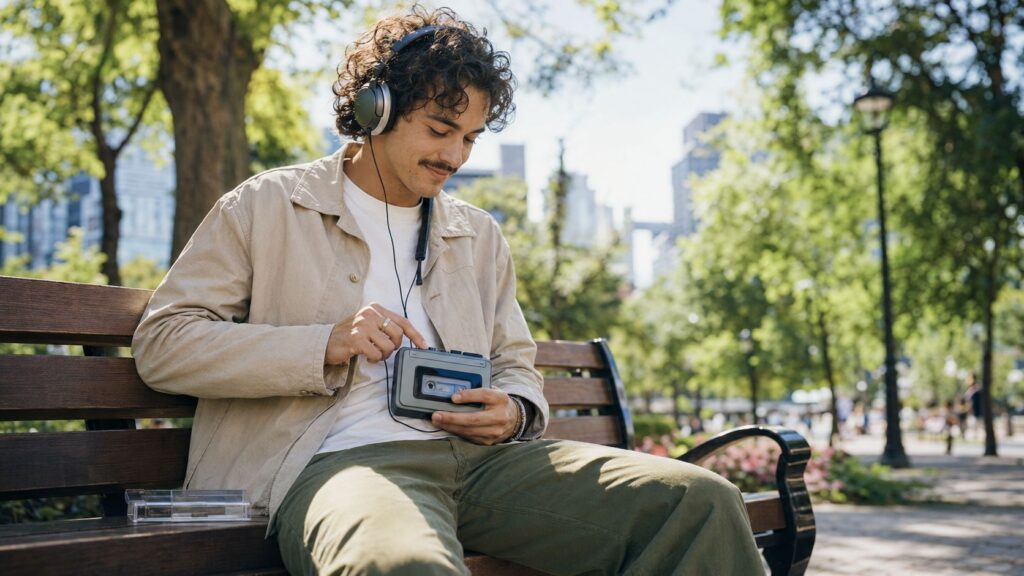
Then there’s the cassette. It’s smaller, cheaper and considerably more temperamental than vinyl, although its imperfections may be part of the appeal. A cassette can hiss, wobble and occasionally threaten to donate its internal ribbon to the machinery.
This is not flawless technology. It is, however, personal. Mixtapes once required time, sequencing and commitment because songs had to be recorded in real time, and although modern listeners don’t necessarily want to spend an entire evening hovering near the pause button, the format still carries that sense of intention.
Cassette sales remain modest, but they’re hardly imaginary. UK sales climbed by 53% in 2025 to 164,000 units, according to the Official Charts Company. That won’t cause streaming executives to spill their oat-milk lattes, but it does show that inconvenience isn’t always a deal-breaker; sometimes it’s the feature.
Zines Offer a Feed You Can Hold
Music isn’t the only culture escaping the screen. Physical zines, which are small, independently made publications filled with writing, art, collage, photography, or anything else their creators can fit between two staples, are finding new readers because they exist outside the polished world of social media.
A zine doesn’t need to please an algorithm. It doesn’t have to post consistently, optimise a caption or turn every thought into a vertical video before somebody loses interest. It can be rough, niche, funny, political, deeply personal or delightfully strange.
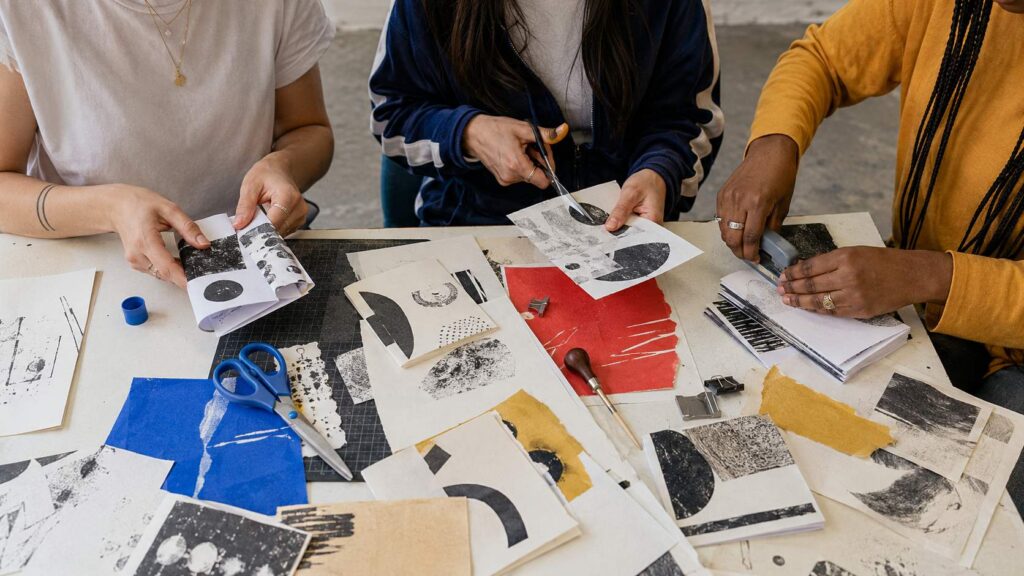
Since zines are usually made and shared on a small scale, they bring back a personal connection between creator and reader. You might buy one straight from the maker at a market, find it in an indie shop, or get it from a friend who says, “This reminded me of you.” That’s much more charming than an app telling you people like you enjoyed it.
The format’s renewed relevance isn’t simply aesthetic. As Wired reported, contemporary zine culture is also giving creators a way to share ideas without depending entirely on corporate platforms, shifting policies or invisible recommendation systems.
Paper doesn’t shadow-ban you.
It may give you a paper cut, but at least the terms are clear.
Nostalgia for a Time You Didn't Experience
There’s an interesting contradiction at the heart of the analogue revival.
Many younger collectors are nostalgic for formats they barely remember or never used the first time around. Yet nostalgia doesn’t always require a personal memory; sometimes it’s a longing for the qualities associated with an earlier way of living.
Physical media feels slower. It seems more private, more intentional, and less disposable, even if people in the past probably didn’t see rewinding a tape with a pencil as anything special.
Analogue culture also gives you something you can see and show. A playlist might say something about you, but a shelf of records, a pile of zines, or a cassette in your bag takes up real space. It becomes part of your room, your conversations, and your personal story.
You can lend it. Keep it. Damage it slightly and become disproportionately upset.
That sense of permanence is comforting, especially now when digital libraries can change, subscriptions can end, and online content can vanish without warning.
It's Not About Rejecting Technology
The analogue revival isn’t necessarily a declaration of war against streaming.
Most people who own vinyl still use digital platforms, and zine makers often share their work online. The real change is more subtle: people are choosing when they want things fast and when they’d rather have something with texture, effort, and a bit of challenge.
You don’t have to build a big, expensive collection right away. One record you truly love means more than a shelf full of albums bought just to impress guests. And a zine from a local creator can feel more personal than another month of unused digital subscriptions.
The point isn’t purity. It’s about taking back some choice from systems that want everything to keep moving, playing, and refreshing. When we hold a record, flip a cassette, or read a printed page, we’re not just consuming content—we’re giving it a place and some of our full attention.
Perhaps that’s what the analogue revival is really about.
Not about leaving the future behind, but about remembering that culture feels different when we can hold it, and when the next thing doesn’t start right away.
Blog Proudly Sponsored by Space Station 420 | Gordon’s Bay