


Rolling Stoner Sessions with Mama G's and Sugarman
From Wedding Muffins to 22 Awards: The Mama G's Story.
Interviewer: Andrew Macfarlane
Transcriber and Writer: Marli Wentzel
Most modern cannabis brands start with a formal business plan. But Mama G’s started with a tray of hot muffins served to guests at their wedding reception.
That was back in 2017. Nearly a decade and 22 competition awards later, the Knysna-based edibles brand has grown into one of the most decorated names in South African cannabis.
Yet through it all, the operation remains remarkably intimate, still run by the same couple who baked that first batch by Mama G and her husband, Sugarman.
Rolling Stoner recently caught up with the pair over a video call on a brisk, windy afternoon.
The Mama G’s crew had just returned from a trip through Germany and the Netherlands.
What was meant to be a quick 30-minute catch-up naturally spilt over into an hour-long deep dive covering everything from beekeeping and church pubs to anti-drug pamphlets and the steep learning curve of burnt sugar.
At its core, it is one of the most candid origin stories in the local industry

It Started at the Reception
“How we came about was really unintentional,” Mama G reflects. “We got married in 2017, and at the reception I said, well, let me make some weed muffins.”
The cannabis came from the couple’s very first major harvest, grown from a haphazard collection of seeds gathered wherever they could find them. Standardised dosing was a concept they hadn’t yet encountered.
“We didn’t know anything about dosing,” she laughs. “Grind up some weed, make sure there’s no seeds and stalks, and put it in.”
The muffins came out of the oven warm, with butter melting into the tops. They were an immediate hit with the guests, most of whom helped themselves to a few. But one specific moment left a lasting impression on the newly married couple. Sugarman’s uncle, a former firefighter living with severe PTSD from his years in service and combat, historically struggled with chronic sleep deprivation. That night, after eating the muffins, he slept deeply and peacefully.
“So, we thought, oh, that’s pretty cool,” Mama G says.

From Free Biscuits to "I'll Pay for That"
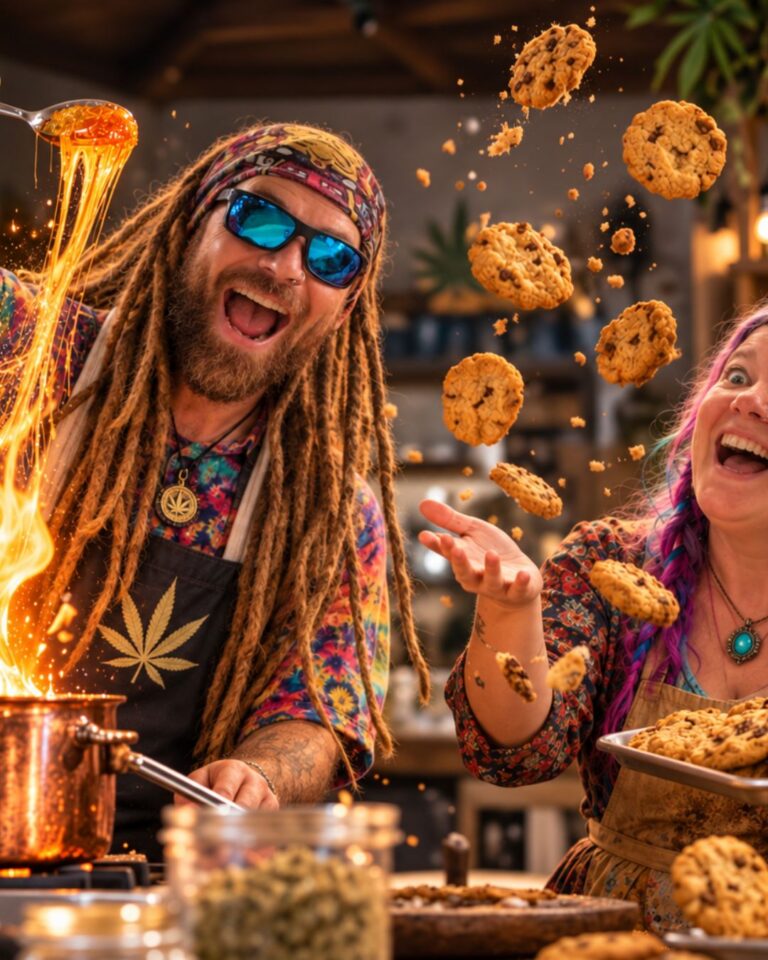
What followed was months of relentless kitchen experimentation. Biscuits, chocolates, and testing various infusion techniques. Whatever came out of the oven was freely distributed to friends, family, and locals, accompanied by a simple promise that it would brighten their day and guarantee a good night’s rest.
About two months into giving away their products, a customer made an unfamiliar proposition. They wanted to buy them.
“And I was like, that’s a great idea,” Mama G recalls. “We never thought of charging anyone. And then it just got bigger and bigger and bigger.”
Learning the Hard Way
In those early days, there were no operational manuals or specialised professional equipment. When Sugarman set out to craft their first lollipops, he didn’t own a candy thermometer, resorting instead to a standard meat thermometer.
“Either I burned the sugar, or that thermometer would fall over as I took it out and burn me,” he says. “Five or six times, before we could actually make lollipops. Now it’s easy.”
As the home hobby evolved into a legitimate business, guesswork stopped being sustainable. The couple began submitting their extracts to commercial laboratories to establish accurate, repeatable dosage levels. The lab results brought a surprising reality check.
While international research suggested a 10 mg serving, the standard legal cap in markets like California was appropriate. Local demand told a different story.
“In reality, everybody wanted 100 milligrams,” Mama G says. “That was eye-opening.”

Quietly Underground, Then Out in the Open
For its first few years, Mama Gs deliberately maintained a low profile, even as early awards began to trickle in. The South African cannabis space was still navigating legal grey areas, the couple had young children to consider, and a significant portion of their production was white-labelled for other brands.
“We were fine with that,” Sugarman explains. “You couldn’t just be out there. We have children, so we decided not to push it too hard.”
The turning point came roughly three years ago. A wave of new brands flooded the market with polished packaging and aggressive marketing strategies. Around the same time, a friend urged the couple to visit Cape Town to observe the evolving landscape firsthand.
Upon arrival, they discovered that while their white-labelled products were everywhere, almost no one recognised the name Mama G’s.
Industry peers offered straightforward advice. Establish a direct presence on social media.
They embraced the challenge, creating video content, applying their own branding to all outgoing products, and introducing the faces behind the brand to their consumer base.
Their wholesale channel expanded with a similarly organic momentum. Mama G joined a local Facebook cannabis group, which led to an invite to a WhatsApp networking group, and quickly multiplied into five active trade groups.
As retailers began reaching out directly to stock the full range, the transition from direct-to-consumer retail to wholesale supply became the clear path forward.
To this day, Mama Gs operates without a formal sales team. Outside of that single trip to Cape Town, they have never engaged in traditional cold-calling or door-to-door sales pitching.
“We just go back to say hello to the people we know,” Sugarman says. “That’s more important to us than finding new people. If you’re doing a good job, your cannabis will sell itself.”
The Award That Saved the Dog
Over its operational history, Mama Gs has secured 22 competition awards, and its first win came out of sheer necessity.
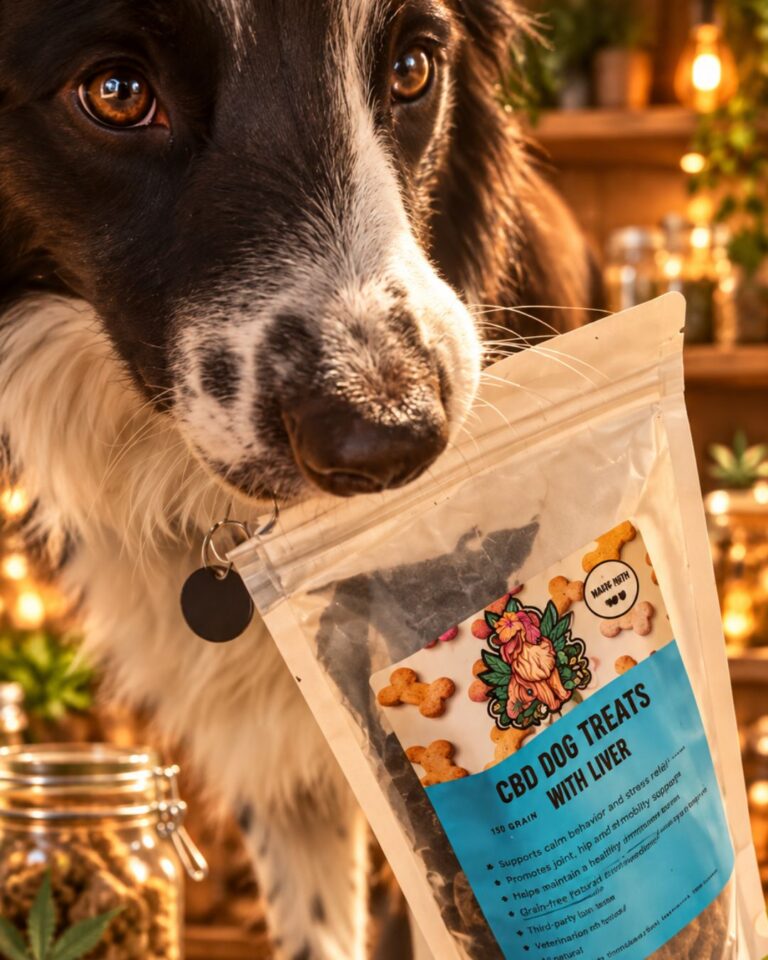
The couple’s dog fell critically ill when her immune system began attacking her liver, requiring an emergency blood transfusion they couldn’t afford. Right around that time, a friend from Hogsback called with news of a cannabis competition, Sannabis, in Johannesburg, offering a R10,000 cash prize for first place.
While the friend suggested entering traditional brownies, Sugarman wanted to showcase something unique.
“If you make somebody a box of bars and chocolates, you can’t beat it,” he says.
They submitted two product entries and took home both first and third place. The R10,000 prize money directly covered the emergency veterinary bills and established Mama Gs as a competitive force in the region.
They went on to claim victories at that same competition for four consecutive years. As entry numbers expanded industry-wide, the couple instituted a strict quality benchmark before entering any event.
Is this a R10,000 edible? If a product didn’t meet that standard internally, it wasn’t submitted.
The accolades continued to accumulate. At the Stoned Olympics, Mama Gs secured second and third place in their inaugural year, missing first place by a single point, before taking top honours every year thereafter. At the Green Cup, they consistently brought home two trophies per event.
Eventually, the brand’s reputation was reflected in the sheer volume of competition. In later years, edible categories regularly drew between 35 and 50 entries, driven largely by rival makers competing specifically to unseat them.
“Everybody wanted to beat Mama G’s,” Sugarman notes.

From the Podium to the Judges' Table
Their consistent success eventually led to invitations to serve as judges in competitions.
Mama G and Sugarman have spent two years judging the edibles category at the Stoned Olympics and the Garden Route competition.
Recently, the couple travelled to Thailand to serve on the judging panel for the Phuket Cannabis Cup.
“A great honour,” Sugarman says.
They were also slated to judge the Green Cup before its hiatus, which followed the withdrawal of international funding.
Judging criteria evaluate overall flavour profile, extraction quality, therapeutic effect, and culinary execution. Some competitions require entrants to submit complete production methodologies, a requirement some producers resist because of IP concerns. Intellectual property theft remains a reality in the market, where knockoff versions of popular products can surface rapidly.
Sugarman’s approach to competition is pragmatic. Focus on maintaining your own production standards and let the market decide.
Developing a trained palate for competition judging naturally carried over into their personal lives.
“We’re very judgy, even when we go to a restaurant,” Mama G admits. “This could use more of this, maybe a little bit of this herb. It gets so ridiculous that we stopped going out, because we can make better food at home.”
Why the Whole Plant Matters
That focus on flavour and culinary balance drives their core product philosophy.
Drawing on years of restaurant experience, Sugarman draws parallels between cannabis and fine wine, appreciating the distinctive terpene profiles of different cannabis cultivars much as winemakers appreciate the character shaped by grape varieties and terroir.
He is particularly focused on live rosin made from cannabis frozen soon after harvest to help preserve its aromatic profile.
Their recent trip across Europe reinforced their commitment to whole-plant extraction methods.
Sugarman strongly advocates for cannabis access as a fundamental human right rather than an exclusively pharmaceutical model, leaving him underwhelmed by Germany’s pharmacy-centric distribution network. Similarly, the commercial edibles encountered in Germany and the Netherlands revealed a reliance on isolated THC distillates and synthetic cannabinoids driven by local regulatory frameworks.
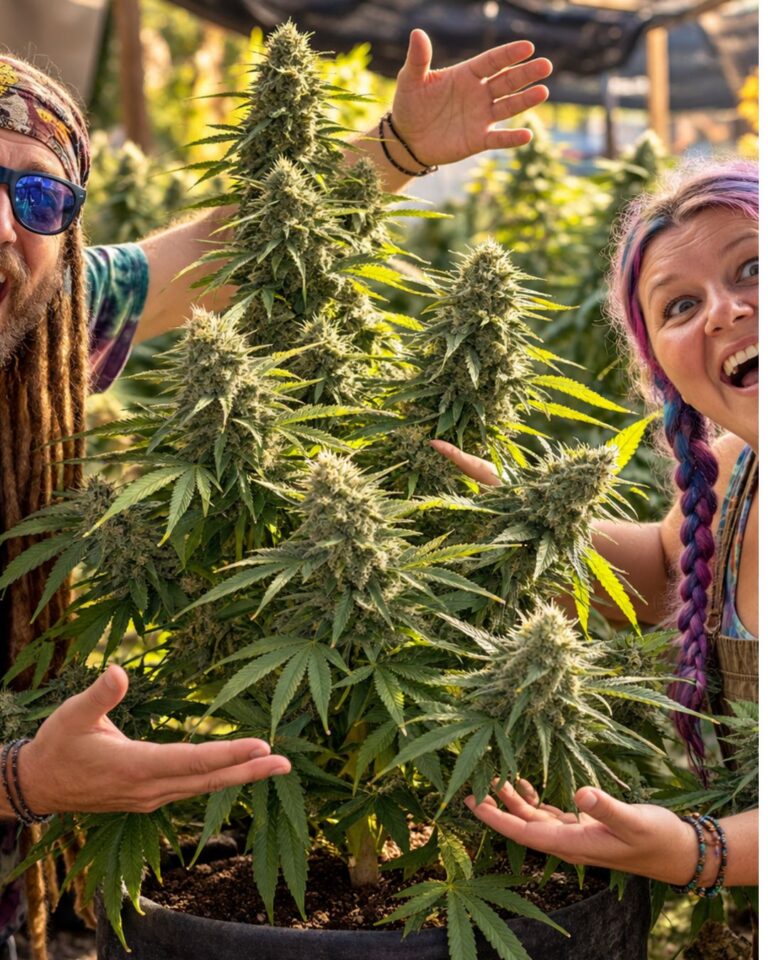
Mama G’s remains committed to full-spectrum, whole-plant formulation.
“You need all the cannabinoids and terpenes to produce a full effect,” Mama G explains. “Otherwise, it’s going to be disappointing, and probably unsafe if it’s synthetic.”
They note that whole-plant formulations also deliver a noticeably more balanced and potent consumer experience.
The European trip also provided light-hearted moments. Upon exiting a train near a German cannabis trade show, Mama G was handed a flyer by a woman she initially assumed was a religious missionary.
It turned out to be anti-drug advocacy literature from a local protest group. She returned the pamphlet with a laugh and moved on.

What's Next: A Taste of the Roller Rink
The couple returned from Europe with new concepts inspired by both international cannabis markets and everyday commercial food products. Several new formulations are currently entering research and development to determine their viability for the core product line.
Their next commercial release is already slated for launch within the coming month. A second craft soda flavour was produced in collaboration with beverage brand Sodaze. For Mama G, the recipe is deeply personal.
“It’s a flavour from my childhood, when my sister and I used to go to the roller rink,” she says. “They used to serve these drinks called a Bombshell. So, we’re going to be recreating that. It’s all about nostalgia.”
The Mama G's Way
Despite 22 competition trophies, international judging appointments, and a growing national wholesale footprint, the core philosophy guiding Mama G’s remains unchanged from their 2017 wedding day.
Craft high-quality products using whole-plant extracts, build genuine relationships, and maintain personal connections across their network.
“That’s the coolest thing about the cannabis community,” Sugarman reflects. “So many real people. Anybody can be a stoner, from a judge to a nurse to a doctor to a cook.”
And as their operational history has proven, when you prioritise product quality and integrity, the cannabis speaks for itself.