

South Africa’s Cannabis Sector Is Reaching a Breaking Point
By Katherine Pretorius
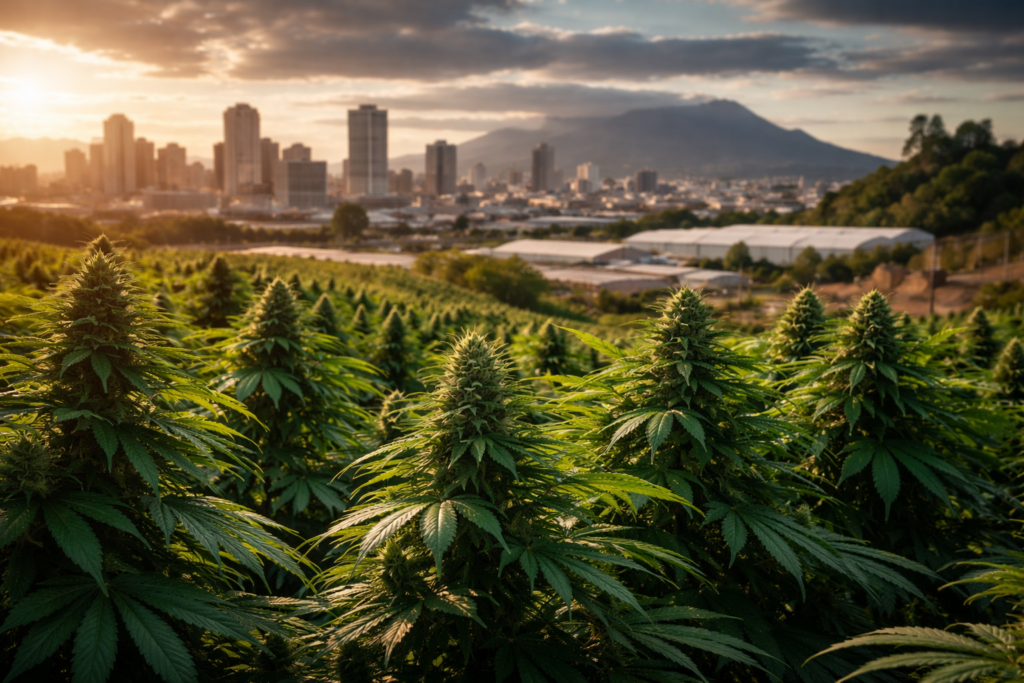
South Africa’s cannabis sector is entering a moment that feels impossible to ignore. For years, the country’s cannabis story has been driven by court rulings, constitutional rights, and policy promises. Now, all of those loose ends are starting to pull tight at once. Regulation, enforcement, commercialisation, access, and inclusion are no longer separate conversations.
That is what makes this stage so important.
South Africa already has the legal foundation for private cannabis use. Adults may use and cultivate cannabis in private under certain conditions. But a legal foundation is not the same thing as a functioning system. Without clear rules, fair access, and proper implementation, the country risks creating a cannabis sector that looks progressive on paper while staying confused, unequal, and half-built in practice.
Right now, South Africa’s cannabis sector is showing clear signs of policy compression. Multiple unresolved issues are converging into urgent decision points, and the pressure is rising.
Finalising the rules is no longer optional.
One of the biggest issues is the delay in finalising detailed regulations under the Cannabis for Private Purposes Act. This matters because the broad legal rights may be there, but the practical rules needed to make those rights work consistently still feel incomplete.
The urgent task now is to turn constitutional protections into clear, enforceable guidelines. That means setting out rules that ordinary people, law enforcement, growers, and businesses can actually understand and follow. It also means making sure SAPS enforcement aligns with what the courts have already recognised.
Without final regulations, the law remains open to uneven interpretation. In reality, that often means one thing in a city and another in a rural area. It can mean one official applies the law one way, while another applies it differently. That kind of inconsistency creates confusion, mistrust, and ongoing vulnerability for cannabis users and small growers who are meant to be protected by the law.
At this point, finalising the rules is no longer a technical step sitting somewhere in the background. It is central to whether this legal shift becomes meaningful in everyday life.
Legal use without legal supply is not sustainable.
Another pressure point is becoming harder to avoid. Across policy discussions and business coverage, one truth keeps surfacing: private-use legality without legal access to supply is structurally unsustainable.
South Africa has moved on private use, but it still does not have a properly developed legal supply chain for the wider market. That creates a contradiction at the heart of the sector. People may have the right to use cannabis privately, but the systems around cultivation, distribution, retail, and market participation remain patchy, restricted, or unclear.
This is why calls are growing louder for licensed cultivation frameworks, lawful distribution channels, and proper retail systems. It is also why there is increasing pressure to integrate informal and traditional growers into the legal economy rather than designing a system that only works for large, well-funded operators.
If the supply side remains underdeveloped while private use is protected, the result is predictable. The illicit market stays strong, small operators remain stuck in the shadows, and the legal system never fully catches up with the reality on the ground.
Traditional growers cannot be an afterthought.
This is one of the most important issues in the entire conversation.
South Africa’s cannabis culture did not begin in corporate boardrooms or policy documents. It has deep roots in rural communities, traditional cultivation regions, and informal trade networks that have existed for generations. So as the state moves toward a more structured cannabis economy, the question of who gets included is becoming impossible to ignore.
There is growing concern that legacy growers could be economically excluded if licensing systems become too expensive, too technical, or too heavily shaped around formal corporate compliance. That would be a serious failure. It would mean the people who carried cannabis knowledge and cultivation through prohibition could end up locked out of the legal market their experience helped make possible.
That is why more equitable licensing models are gaining attention. Ideas such as cooperative licensing, tiered or micro-licence systems, and geographic protections for traditional cultivation regions are being discussed more seriously. These kinds of models offer a way to build a sector that reflects South Africa’s realities instead of copying systems that work only for major investors.
If government gets this part wrong, the legal cannabis economy could simply become another story of consolidation and exclusion. If it gets it right, cannabis could become a real vehicle for rural inclusion and economic participation.
Medical cannabis still feels unbalanced.
South Africa’s medical cannabis framework is another area showing structural imbalance.
On paper, there is a legal medical cannabis system. In practice, though, it remains heavily export-focused, highly regulated, and costly to enter. That has created a strange and frustrating situation. Cannabis can be legally cultivated at scale, but access within South Africa remains limited for many of the patients who might benefit from it.
This kind of setup creates a two-speed industry. On one side, there is regulated production tied to licensing, compliance, and export opportunities. On the other, there are local patients and smaller operators who still face major barriers. That imbalance raises difficult questions about who the medical cannabis system is really serving.
A healthy domestic medical cannabis framework should not exist mainly to satisfy export demand while local access remains narrow and difficult. If the sector is going to claim health value, then accessibility at home matters just as much as international trade.
Hemp has potential, but progress is still slow.
Hemp continues to be promoted as one of the safer and more strategic parts of the wider cannabis economy. It has strong appeal because it can feed into multiple sectors, including sustainable materials, food production, and manufacturing inputs. In a country looking for greener industries, rural opportunity, and alternative agricultural pathways, hemp makes sense.
But even here, progress has not been as smooth as the headlines sometimes suggest.
Growth is still being slowed by fragmented regulatory oversight and a lack of processing infrastructure. In other words, the idea is strong, but the systems needed to support large-scale success are still catching up. Hemp may be the least controversial branch of the cannabis sector, but it still cannot reach its full potential without coordinated policy and proper investment in the value chain.
So while hemp remains a promising part of the picture, it is not a shortcut around the country’s larger cannabis-policy problems.
Law enforcement still needs clear direction.
One of the clearest signs that the system remains unfinished is the continued inconsistency in law enforcement.
Reports of arrests in unclear “public versus private” situations, along with uneven interpretations of possession limits, show that the legal shift has not fully filtered through to street-level enforcement. That leaves cannabis users vulnerable to confusion and selective enforcement, even after major legal progress.
This is why operational guidelines matter so much. It is not enough to pass legislation or publish policy intentions. Law enforcement officials need clear, workable direction on how to apply the law fairly and consistently. Without that, constitutional protections remain fragile in practice.
This issue goes beyond inconvenience. It affects trust in the justice system, shapes public understanding of cannabis reform, and determines whether the law functions as a source of protection or uncertainty.
South Africa is running out of room for half-measures
All of these threads point to the same conclusion: South Africa is reaching a regulatory breaking point.
The legal foundation exists, but the country cannot continue to rely on it alone. Without proper execution, cannabis reform risks reinforcing the very problems it was meant to address. Inequality could deepen. The illicit market could remain dominant, traditional growers could be sidelined, patients could stay underserved, and businesses could remain trapped in uncertainty.
That is why this moment matters so much.
South Africa no longer needs vague promises about cannabis potential. It needs execution. It needs clear, fair, and workable regulations. It needs supply-chain reform that reflects economic reality. It needs licensing models that do not shut out the people who built cannabis culture long before it became a policy priority. And it needs law enforcement standards that turn rights into something real.
The country is no longer asking whether cannabis belongs in the legal and economic mainstream. That part has already been answered. The real question now is what kind of system will be built around it.
And that answer will shape the sector’s future for years to come.