

The 88,000-User Data Leak:
Why Cannabis Privacy Rights Matter More Than Ever
Cannabis privacy rights have become central to the legalisation debate because cannabis reform is about more than access to a plant. At its heart, the cannabis movement is about dignity, privacy, personal freedom, and protection from discrimination.
Those concerns became urgent again after MyBroadband reported that personal records linked to Cannabis Club Systems may have been accessible through a reported vulnerability.
The article said this may have included photographs of South African identity cards and passports, with the researcher claiming that South Africa was the second most affected region.
Cannabis Club Systems has since issued a statement in response, saying it is important to distinguish between a security vulnerability and a confirmed public data leak. The company said the reported vulnerabilities had been remediated, that PuffPal and its associated backend services had been temporarily suspended, and that:
“CCS has not identified any verified evidence that personal information was publicly leaked, published, or distributed.”
Whether this case is ultimately treated as a confirmed data leak, a remediated vulnerability, or an incident still under investigation, it highlights an uncomfortable reality: cannabis users remain vulnerable long after the legal battles have been fought.
In South Africa, private cannabis use has been protected by the courts since 2018. The Cannabis for Private Purposes Act has also created a formal legal framework around private use, possession, and cultivation.
However, many people assume this means cannabis users no longer face meaningful risks.
The reality is more complex in our digital age.

Why Cannabis Privacy Rights Matter
Privacy can sound like something only tech people worry about. But for cannabis consumers, it is much more personal.
If someone’s cannabis-related information becomes public, the fallout can be serious. People may worry about their job, family life, insurance, finances, reputation, or how others may judge them.
A leaked email address is frustrating.
A leaked ID document linked to cannabis use is far more serious.
MyBroadband reported that the information which may have been accessible included full names, email addresses, phone numbers, identity documents, full ID numbers, passports, cannabis consumption estimates, and strain preferences.
That is not just customer information.
It is deeply personal data tied to people’s private choices, habits, identities, and lives. If mishandled, it could expose consumers to scams, identity theft, embarrassment, discrimination, or unwanted attention.
For many people, cannabis remains a private part of their lifestyle. Some use it for wellness. Others use it recreationally, spiritually, or medically. Whatever the reason, that choice should not automatically become public knowledge.
Legal cannabis access should make people feel safer, not more exposed. Personal privacy has to be part of that promise.
The Legacy Of Cannabis Prohibition
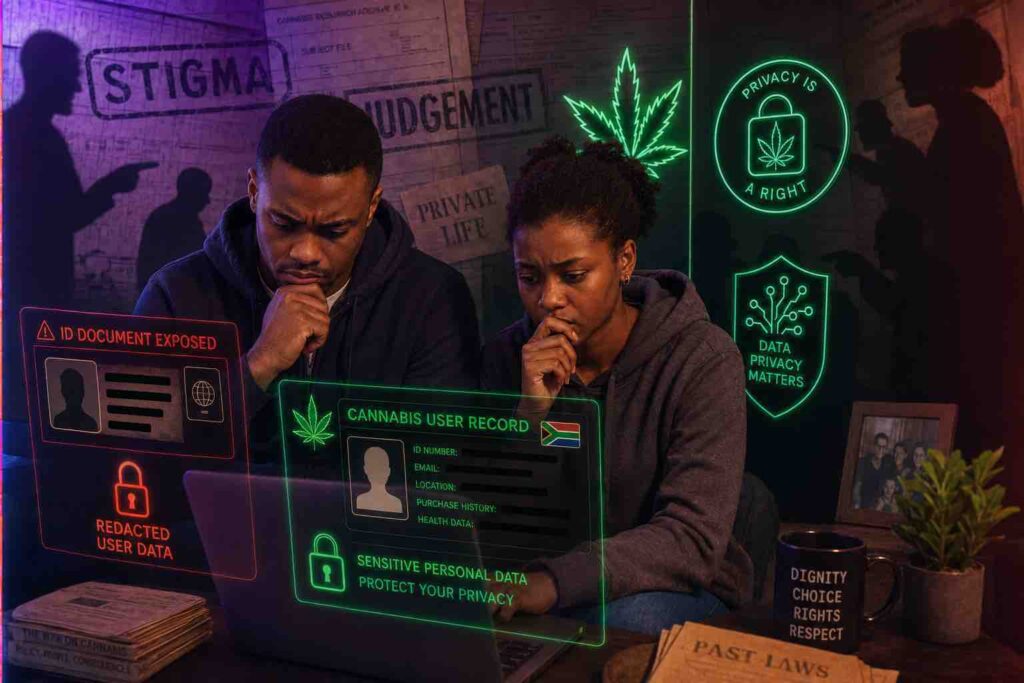
One of the less discussed consequences of cannabis prohibition is the culture of secrecy it created.
For decades, cannabis users hid their behaviour to avoid arrest, criminal records, exclusion, and discrimination. Legal reform changed the law, but it did not instantly remove these fears.
Many consumers still worry about:
- Workplace discrimination
- Professional licensing consequences
- Family court implications
- Insurance concerns
- Banking and financial scrutiny
- Social stigma
- Personal judgement from relatives, employers, or communities
This is why cannabis privacy rights remain important in South Africa.
The law may have moved forward, but society does not always move at the same pace.
Cannabis Privacy Is A Human Rights Issue
The right to privacy is protected under South Africa’s Constitution. It is not a privilege reserved for certain people, certain industries, or certain types of personal information. It is a fundamental right.
Cannabis users should not have to choose between joining legal cannabis communities and protecting their personal information.
As the cannabis industry develops, there is often a strong focus on growth, investment, licensing, tourism, and commercial opportunity. These conversations matter, but consumer protection needs to be part of the same discussion.
Businesses that collect cannabis-related data are handling sensitive information. This may include identity documents, contact details, purchase histories, membership records, medical needs, product preferences, or consumption habits.
That kind of data should be treated with real care. It is not just admin. It is information connected to people’s private lives, personal choices, health, identity, and reputation.
Cannabis consumers deserve privacy, care, and respect.
The Risks Go Beyond South Africa

Cannabis privacy concerns are not unique to South Africa.
MyBroadband reported that Cannabis Club Systems provides digital backend services for cannabis dispensaries and clubs across Europe, including Spain and the Netherlands. According to the article, the researcher said records linked to members from more than 40 countries may have been accessible.
This matters because cannabis remains legally complex across borders. A person may live in a country where cannabis use is legal or decriminalised, but their information could still be stored, processed, or accessed through systems based elsewhere.
As the global cannabis market grows, regulators and businesses face a clear challenge.
They need to build transparent, legal cannabis markets without sacrificing user privacy.
Trust will be one of the most important currencies in the cannabis industry. Once consumer trust is damaged, it is difficult to win back.
What Cannabis Consumers Should Consider
While industry standards improve, cannabis consumers can also take practical steps to protect themselves online.
Before joining a cannabis platform, club, app, or membership system, it is worth asking a few basic questions:
- What personal information does the platform request?
- Is an ID document really necessary?
- How is the information stored?
- Who has access to the data?
- Is the privacy policy clear?
- Can you delete your data later?
- Does the platform offer two-factor authentication?
- Does the business explain how it protects members?
Consumers should also use strong, unique passwords and avoid reusing the same login details across different platforms.
Where possible, two-factor authentication should be enabled. This adds another layer of protection if login details are compromised.
It is also wise to limit the amount of unnecessary personal information shared online.
Cannabis privacy is no longer just a cybersecurity issue. It is part of responsible cannabis use.
The Bigger Conversation Around Cannabis Privacy Rights
The reported exposure of information linked to cannabis users should serve as a reminder that legalisation is not the final destination.
The cannabis movement has always been about rights. It has included the right to grow, possess, access medicine, participate in the economy, and live without criminalisation.
Privacy belongs on that list.
As South Africa builds its cannabis industry, all stakeholders need to recognise that protecting personal information is not only a business responsibility. It is a civil rights issue.
Cannabis clubs, dispensaries, platforms, app developers, and service providers must understand the sensitivity of the information they collect.
Consumers should not be treated as data points.
They are people whose identities, families, careers, and reputations may be affected if information is mishandled.
True Cannabis Freedom Requires Privacy
Cannabis reform has opened the door to a more honest conversation about personal freedom in South Africa.
However, true cannabis freedom means more than avoiding arrest.
It means being able to participate in cannabis communities without fear. It means knowing your personal information will be handled responsibly. It means trusting that legal access will not expose you to unnecessary risk.
Cannabis privacy rights are not a side issue.
They are central to the future of a fair, responsible, and trusted cannabis industry in South Africa.