

What Wall Street’s First US Cannabis Listing Means For South Africa’s Cannabis Industry
The South African cannabis industry should be watching Wall Street closely.
Trulieve Cannabis has become the first US cannabis operator to trade on the New York Stock Exchange. At first, that may sound like a stock market story. However, it points to something much bigger.
It shows what can happen when cannabis moves from cultural acceptance toward financial recognition.
For years, cannabis businesses in the United States struggled to access mainstream financial markets. Many were pushed onto smaller exchanges because cannabis remained restricted at a federal level.
Now, that picture is starting to change.
This does not mean the cannabis industry has suddenly become easy. Or does it mean every cannabis business is safe, stable, or ready for major investment, even though there are still serious challenges around debt, banking, regulation, and price pressure?
However, the message is clear.
When cannabis laws become clearer, money becomes braver.
Why This Cannabis Listing Matters

The New York Stock Exchange is one of the most important financial platforms in the world.
When a cannabis company reaches that level, it sends a signal to investors, banks, regulators and the public.
Right now, this signal suggests that cannabis is slowly being treated less like a fringe sector and more like a formal industry.
That matters because big investors usually avoid uncertainty.
They want rules, structure, compliance, and where the legal lines are drawn.
Without that, capital stays cautious.
Bearing all of this information in mind, you can see the real importance of Trulieve’s listing.
This listing shows that cannabis companies may gain better access to funding when the legal framework becomes easier to understand.
For the South African cannabis industry, that lesson is hard to ignore.
What This Means For The South African Cannabis Industry

South Africa already has a living, breathing cannabis culture.
There are private clubs, growers, wellness spaces, lifestyle venues, cannabis events, edible brands, medical conversations and tourism routes taking shape across the country.
However, the commercial side of cannabis remains complicated.
Adults may use, possess and cultivate cannabis for private purposes. Yet the buying and selling of cannabis remains in the murky commercial grey area.
Currently, cannabis is visible across South Africa, but it is not fully formalised.
That being said, it is already part of the economy, but it is not yet treated like a normal industry.
That is the gap South Africa still needs to close, as we’re a country in need of more employment opportunities.
South Africa Needs A Clear Commercial Framework
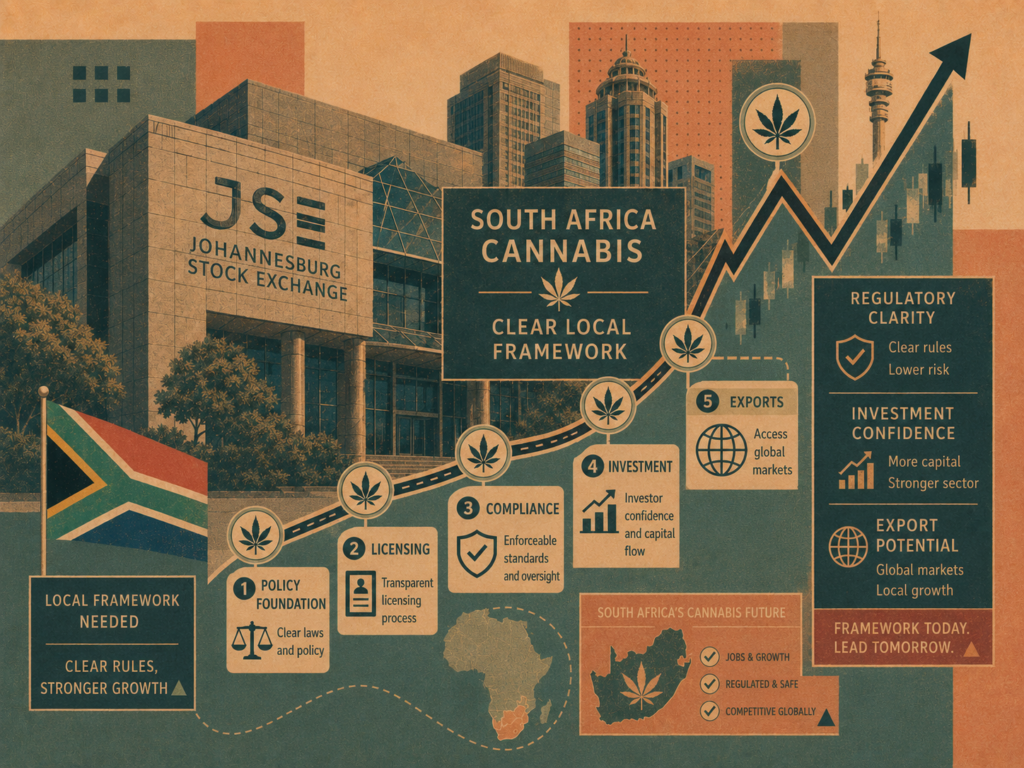
The South African cannabis industry does not need more confusion. Right now, it needs a practical legal framework that people can understand and follow.
This framework should support responsible operators, protect consumers, include legacy growers, and give small businesses a fair chance to enter the formal economy.
Without clear rules, serious cannabis businesses remain limited.
They may struggle to access banking and find it difficult to secure investment. Another issue that many cannabis entrepreneurs face is finding inclusive insurance agreements, advertisers, and tourism partners.
As a result, the industry continues to grow without the support systems that other sectors take for granted.
That slows everything down.
From Private Use To Public Opportunity
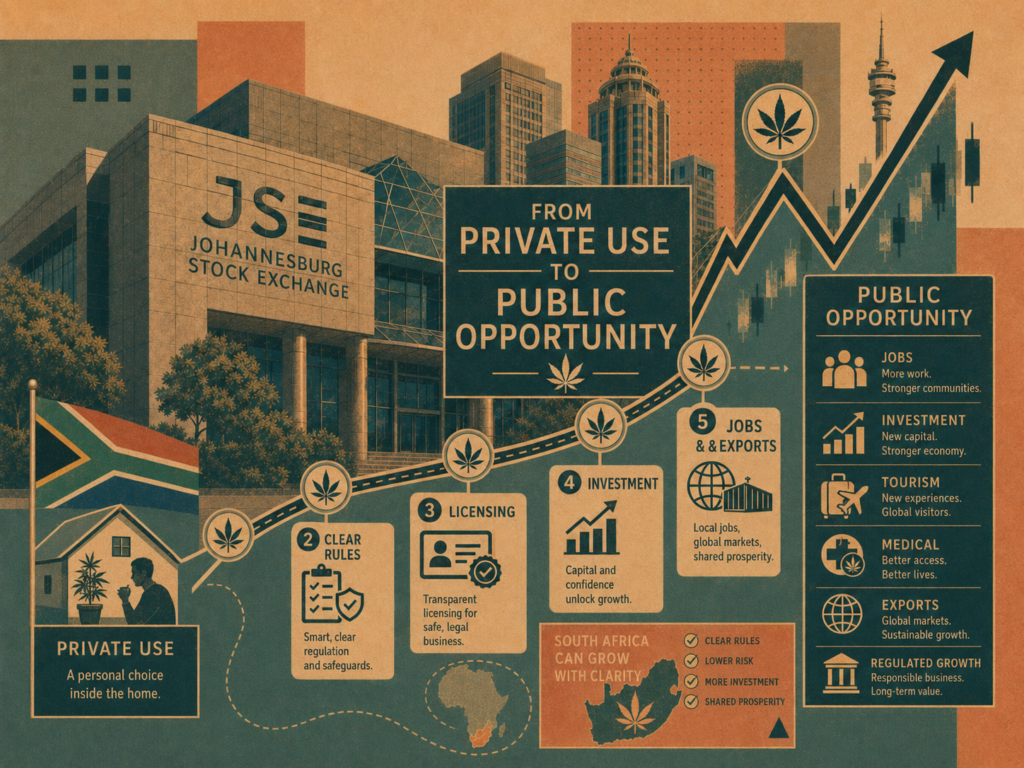
The biggest opportunity is not only about cannabis sales.
South Africa has the potential to build an entire cannabis economy around the plant. This includes tourism, wellness, agriculture, events, education, food, hospitality and rural development.
For Rolling Stoner and Route 420, this matters.
Cannabis tourism needs trust, as well as clear information about credible venues for travellers.
Also, as cannabis tourism’s reach expands, local communities can benefit from smaller operators that need staff. But for these smaller players to take, they need to take the first step; they need rules that allow them to build responsibly.
Without that structure, cannabis tourism remains exciting but limited.
With the right framework, it could become part of South Africa’s wider travel and lifestyle economy.
That is where the real opportunity sits.
Why Legitimacy Matters
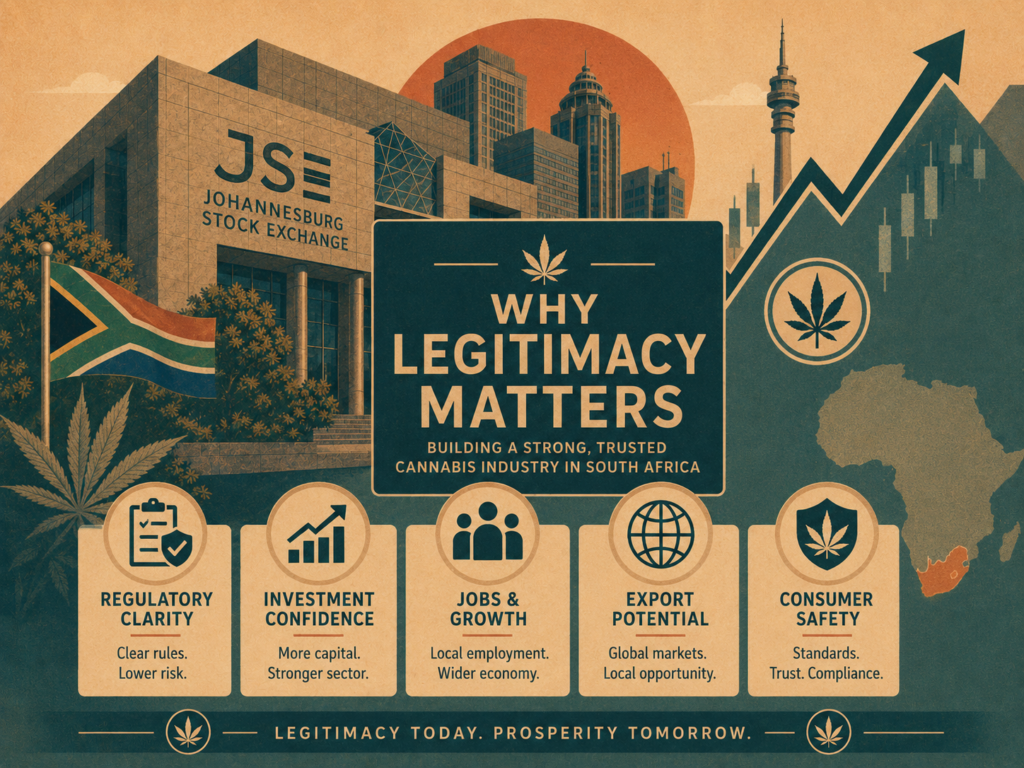
Cannabis does not need to lose its culture to become legitimate.
It does not need to become cold, corporate or soulless.
However, it does need clear rules for the industry to grow safely and sustainably.
Legitimacy changes how people respond to cannabis, as banks, investors, tourism partners and government players will listen differently.
The public also starts to see the plant differently. Instead of only viewing cannabis through old stigma, people begin to see jobs, tax potential, agricultural value, wellness opportunities and tourism growth.
That is why the Wall Street story matters for South Africa.
It shows that the next stage of cannabis growth depends on structure.
South Africa Is Not Behind
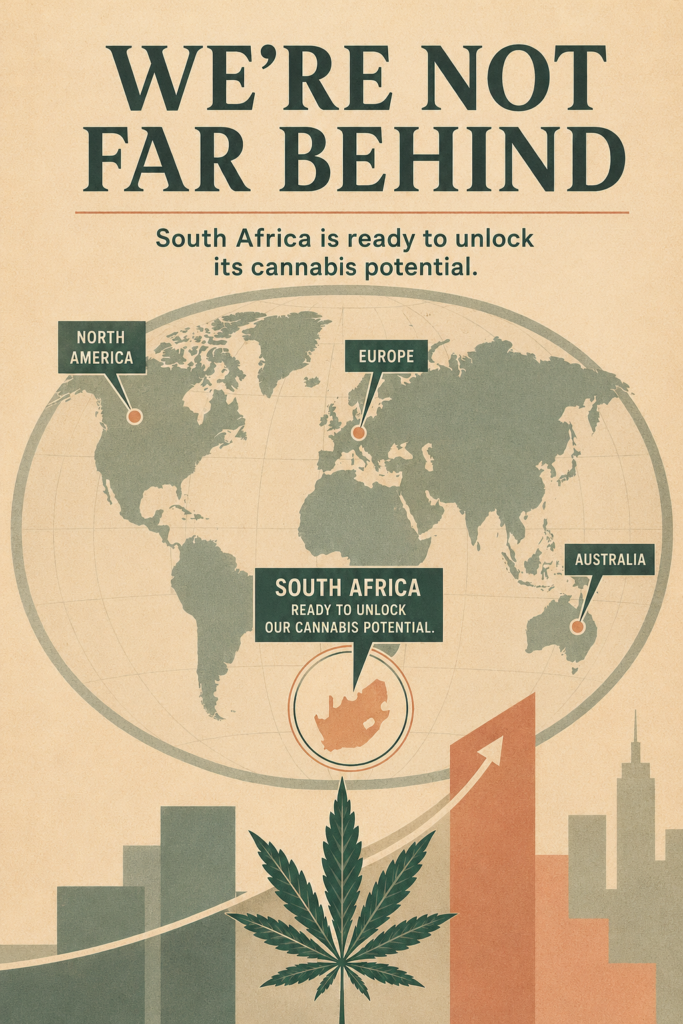
It is easy to look at the United States and think South Africa is behind.
That is not quite true.
South Africa has already made important progress on private adult use. It also has strong cannabis communities, cultivation heritage, emerging medical players, hemp potential and growing tourism interest.
What South Africa still needs is a bridge between private legality and commercial reality.
That bridge matters because it will decide who gets to participate in the industry, how safely it grows, and whether local communities benefit from its future.
The Local Cannabis Industry Is Ready For Its Next Chapter
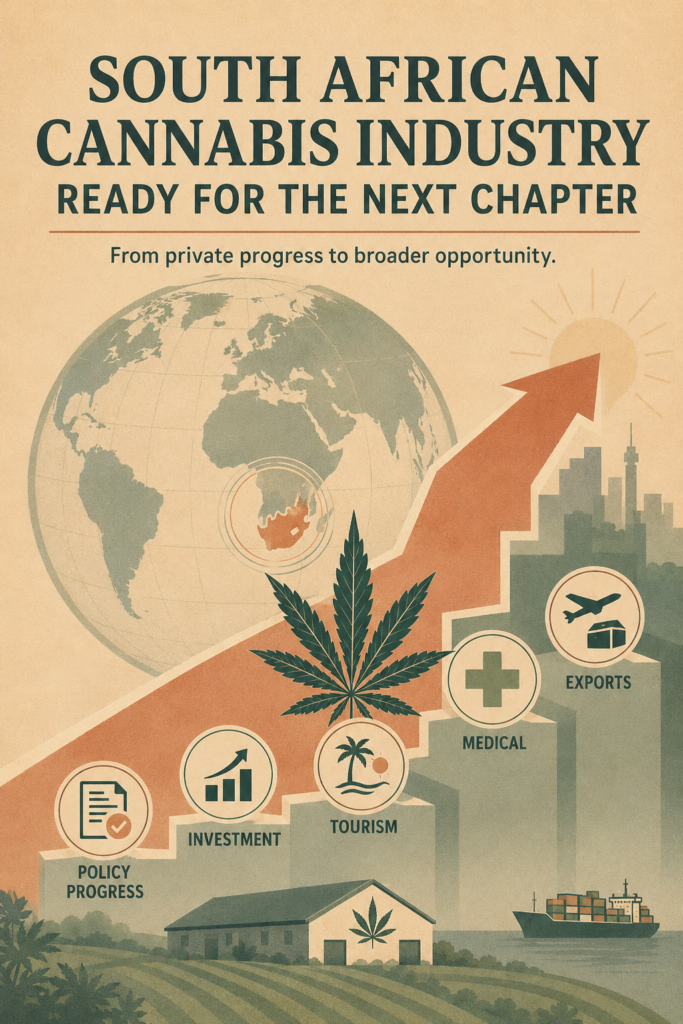
The first US cannabis company on the New York Stock Exchange is not just an American milestone. It is a reminder that cannabis legitimacy happens in stages.
South Africa has already seen the cultural shift. Now the country needs a workable commercial framework to follow.
Until then, the South African cannabis industry will keep growing in the grey areas. It will remain creative, determined, resilient and full of possibility.