

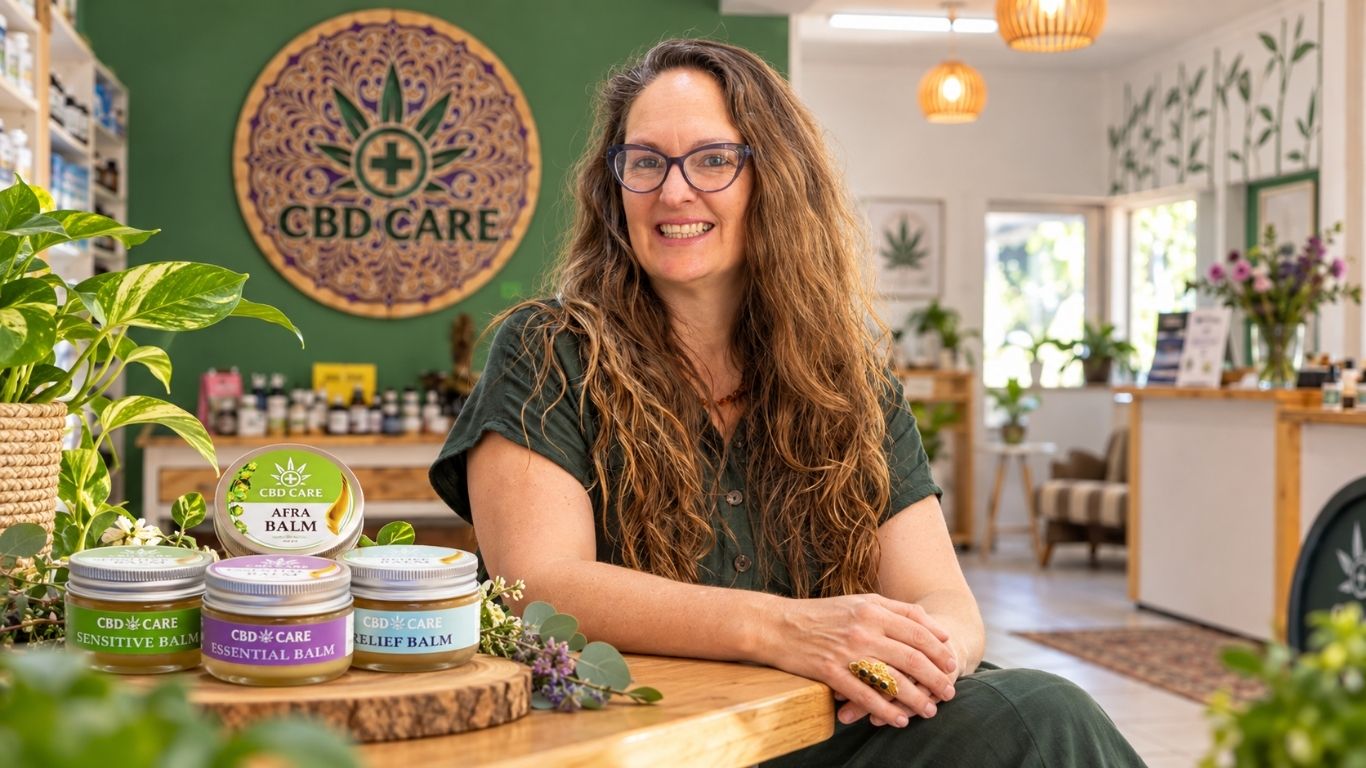
Rolling Stoner Sessions: Megan Steyn Of CBD Care
Putting Plant Knowledge Back At The Centre Of Cannabis
Interviewer and writer: Andrew Macfarlane
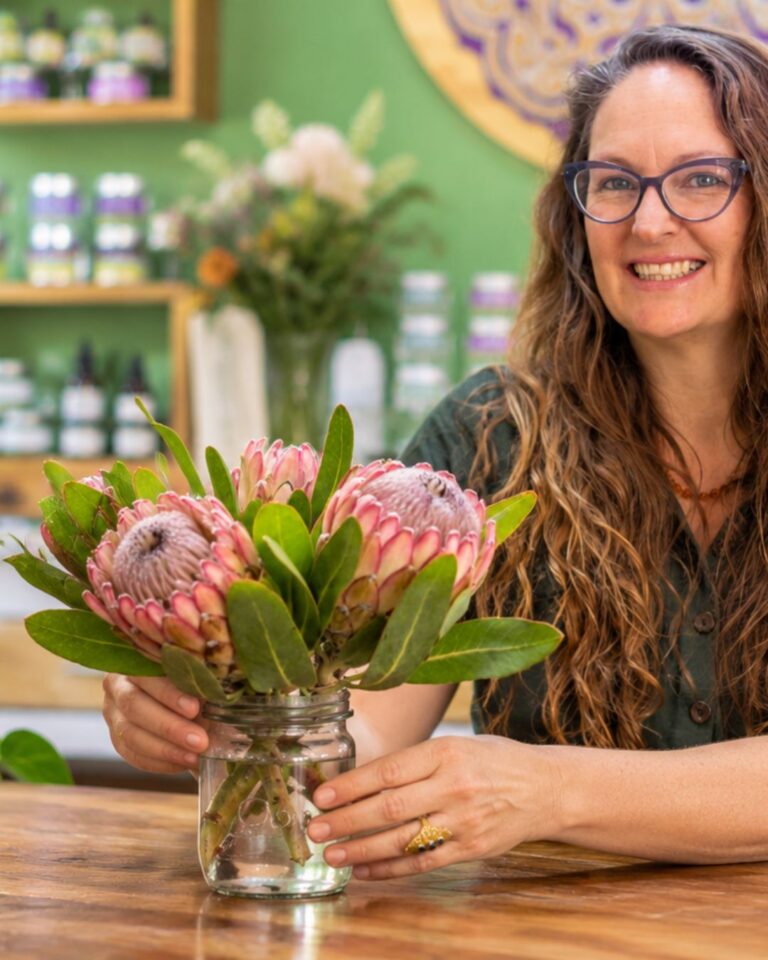
From aromatherapy and herbalism to CBD, indigenous plants and international cannabis standards, CBD Care founder Megan Steyn has spent decades learning how plants interact with people. Now, she wants South African knowledge and South African businesses at the table.
Have a long enough discussion with Megan and, sooner or later, you’ll probably start talking about terpenes.
For her, many of the topics we discussed during our Rolling Stoner Session are hardly new.
Before terpenes became an industry buzzword, she was studying them as part of her therapeutic aromatherapy training more than two decades ago.
“I actually used to giggle in the beginning looking at all these boys in their chinos talking about terpenes,” she says. “You guys are just a bunch of aromatherapists, and you don’t even realise it.”
That wealth of knowledge around cannabinoids, plants and natural wellness helps explain why walking into CBD Care offers something very different from a conventional cannabis retail experience.
Sure, there is CBD.
But there are also tinctures, essential oils, supplements, herbal preparations, skincare products, shampoos, conditioners, household products and a catalogue that has grown to more than 1,000 items.
It quickly becomes clear that CBD Care is a health and wellness shop first and foremost.
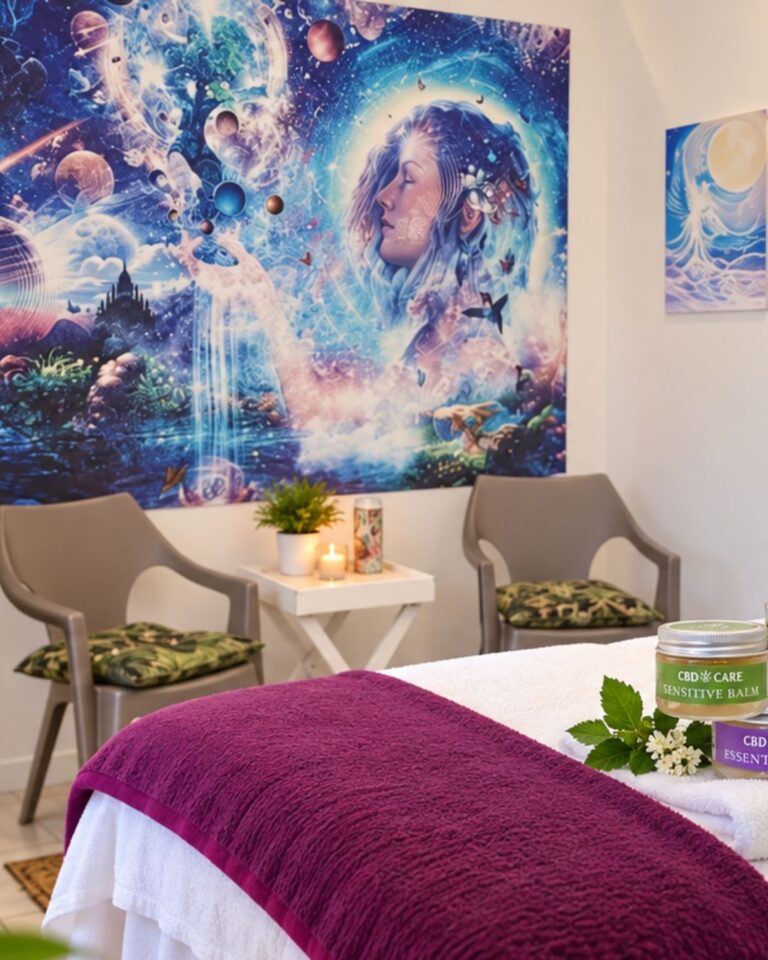
Cannabis Was Never Taboo
CBD Care’s story goes back much further than the shop itself.
Megan qualified as a therapeutic aromatherapist after completing a two-year diploma and continued studying plants, herbalism and natural wellness.
She is also a registered traditional healer, with her plant-medicine background forming an important part of that journey.
Cannabis, meanwhile, was never something mysterious or forbidden in her household.
“My mom was a flower child, is still a flower child, still loves her cannabis,” she says.
That early familiarity gave her a relationship with the plant separate from much of the public stigma surrounding it.
Her professional connection to cannabis deepened while living in Lesotho, where she spent roughly a year on the site of a medical cannabis operation while handling administration for a company involved in the project.
It gave her an opportunity to see commercial cannabis cultivation from the inside.
She later returned to South Africa and began a new chapter in the natural wellness sector.
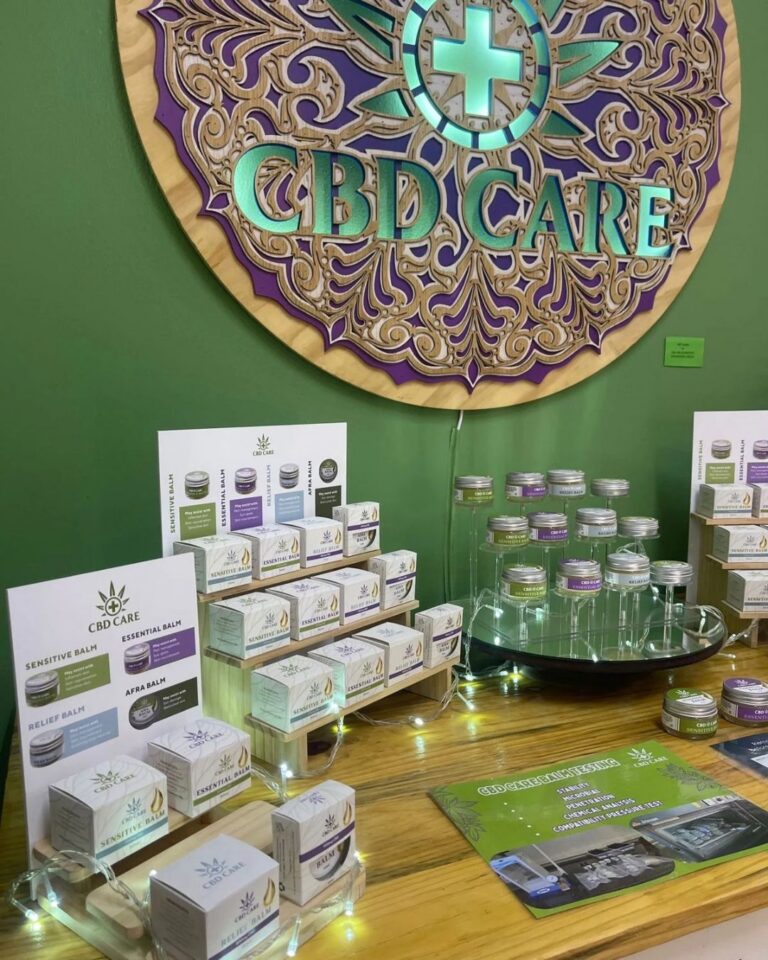
Not A Cannabis Dispensary, But Firmly South African
Seven years later, CBD Care occupies an interesting space within South Africa’s cannabis landscape.
It sells CBD products, and Megan speaks openly about cannabis, but CBD Care is not a “dispensary”.
“I don’t sell bud because of the legalities around it,” she says.
Instead, the business remains firmly centred on CBD, wellness and plant-based products. That distinction also influences what reaches the shelves.
CBD Care’s founder describes herself as “fastidious” about ingredients and actively seeks products that fit the company’s natural-product philosophy.
“I want good product, good quality products on my shelves.”
There is also a strong local focus.
With CBD Care carrying Proudly South African accreditation, the business tries, where possible, to support locally made products and keep more value within South Africa.
CBD Care stocks a broad selection of South African wellness brands, including Nature Nurtures, Phyto-Force, Gaia Organics and Earthsap, alongside its own products and a wider range of natural health products.
That local-first approach extends to CBD itself.
One of Megan’s biggest frustrations is the gap between South African cultivation and the finished products local consumers can actually buy.
“We’ve got all the grows, the companies, the businesses here that can do it,” she says.
However, progress is happening.
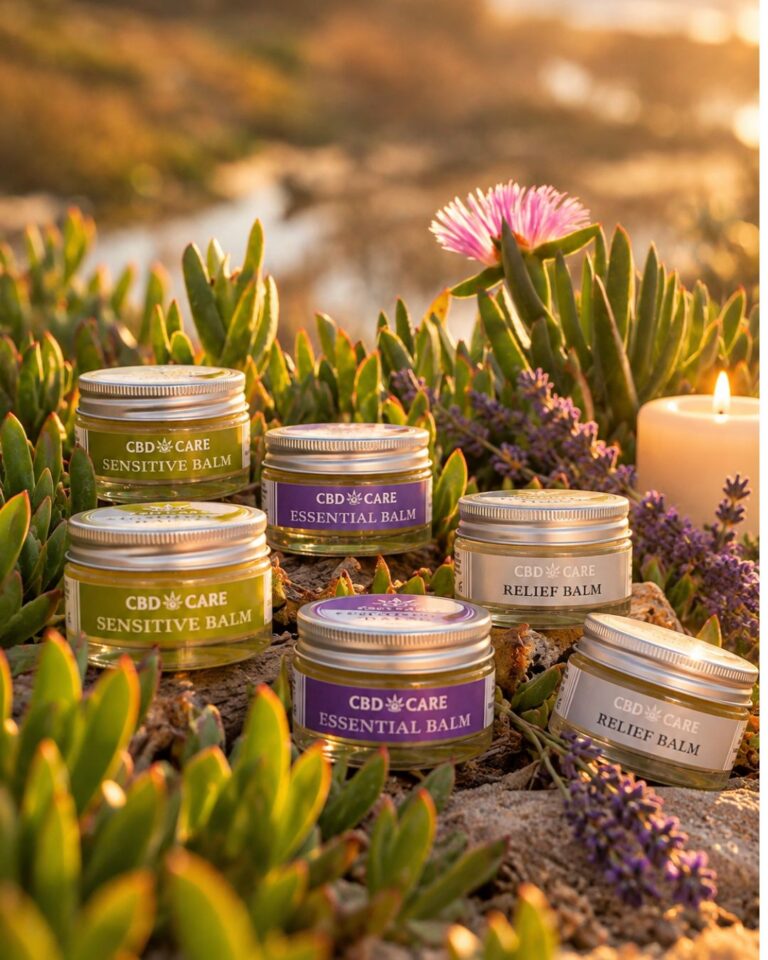
CBD Care has now sourced South African-grown and manufactured CBD for some of its topical products, a milestone after years of wanting to use more locally produced inputs.
Over the past two years, one of CBD Care’s biggest local supporters in helping formulate and test products has been the Technology Innovation Agency (TIA), an entity of South Africa’s Department of Science and Innovation.
For Megan, that support has extended beyond product development, helping CBD Care strengthen its work while also contributing to the credibility of a wider local industry.
“Their backing hasn’t just helped me formulate and test products,” she says. “It’s helping legitimise and uplift an entire industry.”
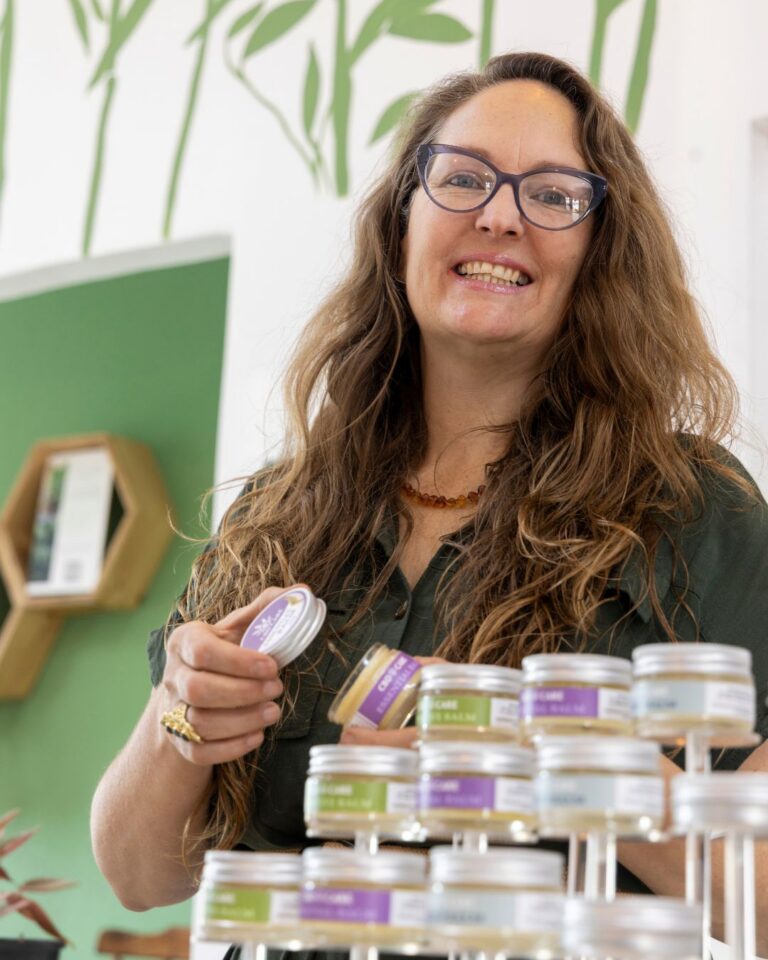
The Challenge Of Building A CBD Brand
There is, however, one lesson Megan would happily pass on to anyone thinking of launching a cannabis-adjacent company.
Think very carefully before putting cannabis terminology in your company name.
“One of the biggest lessons I’ve learned here is for branding, don’t call yourself anything with cannabis or CBD or hemp or THC or anything because you get shadow banned across Meta,” she says.
CBD Care itself was nearly called CannaCare.
“I wanted to call myself CannaCare, but then I just felt that was too stigmatised,” she explains. “So I went with the safer route, which is CBD Care.”
Years later, even CBD can create challenges when navigating conventional advertising platforms.
It’s one of those strange quirks of building a wellness business in a digital ecosystem where algorithms don’t necessarily understand the nuances between cannabis products, cannabinoids, health products and illicit substances.
Sometimes, the “clankers” simply see three letters and slam the door.
Indigenous Knowledge And The Mentors Who Shaped The Journey
CBD Care’s future is increasingly connected to something much older than the modern CBD industry.
Indigenous plant knowledge.
One product Megan wants to place greater focus on is the Afra Balm, combining CBD with Artemisia afra, a plant indigenous to Southern Africa.
For her, the product represents more than simply adding another balm to the catalogue. It connects cannabis with the much wider story of South African plant knowledge.
“I feel like we haven’t spoken enough about the indigenous knowledge systems,” she says.
With a background in aromatherapy and herbalism, Megan has never viewed cannabis in isolation. Instead, it sits within a much broader world of plant medicine, extracts and botanical knowledge.
That perspective is particularly relevant in an evolving cannabis industry where conversations around terpenes, plant extracts and botanical combinations can sometimes feel surprisingly new.
In reality, people have been studying plants and their properties considerably longer than we’ve been designing cannabis packaging.
For Megan, that knowledge is also deeply personal.
During our conversation, two names immediately change her tone: Sharon Price and Sister V.
Both were mentors, and their deaths left a gap that is still clearly felt.
“I miss their counsel, I miss their wisdom and their insights and their understanding of the plant,” she says.
During an emotional exchange, it became clear that their guidance helped shape how Megan thinks about cannabis, plant medicine and the relationships people build with the plants they use.
In that sense, preserving indigenous knowledge also means preserving the memory of the people who carried, shared and developed it.
For a community that continues to honour its Fallen Heroes, those memories matter.
Getting A Seat At The Table
CBD Care is still a retail business, but its founder is increasingly stepping into conversations about what the wider South African health and cannabis industries might eventually look like.
“I seem to be getting involved a little bit in the advocacy space,” she says.
Her concern is that cannabis businesses, natural-health companies, growers, researchers and regulators often operate in separate worlds.
Rather than simply criticising the system from the outside, Megan has decided to learn how it works and, where possible, contribute to the conversations shaping it.
She has been invited to participate in advocacy through the Health Products Association of Southern Africa and has also joined ASTM International’s D37 cannabis committee.
Her motivation is straightforward.
“I feel like if we don’t have a seat at the table, we’re being left behind.”
For Megan, advocacy and standards are closely connected.
She isn’t arguing against regulation or quality standards. Quite the opposite.
“I still want to see good standards that protect people and give local businesses a fair chance to participate,” she says.
The challenge is finding that balance.
That is partly why she wants to better understand how these systems are built in the first place.
“How does one lobby a government? What does advocacy mean in this space? We have the growers, we have the knowledge, we have the entrepreneurs, and I just want to see more of that value stay in our communities.”
From Sedgefield To Somewhere Bigger
Looking ahead, CBD Care wants to continue building awareness around its topical products, particularly the Afra Balm.
Exports are also firmly on the radar.
The company has already begun exploring what that could entail, including export training through Wesgro.
For a proudly South African wellness company, the possibility is an attractive one: a locally developed product built around local ingredients and plant knowledge finding customers beyond the country’s borders.
CBD Care is based in Sedgefield on South Africa’s Garden Route.
Rolling Stoner Sessions explores the people, businesses and stories helping shape South Africa’s evolving cannabis culture.
Disclaimer: This article discusses cannabis, CBD and natural wellness for informational purposes. It is not medical advice.